05
Sustainable Logistics · MSc Thesis
2026Reusable Packaging for Milan Last-Mile Delivery
A provider-side cost and climate feasibility study comparing single-use packaging with centralized and local-circulation reusable systems in Milan's parcel-locker network.
Role
MSc thesis researcher · Model design, geospatial analysis and feasibility evaluation
Context
Politecnico di Milano · Supervised by Arianna Seghezzi and Giovanni Garola
Methods
Last-Mile Logistics · Reusable Packaging · ArcGIS · Life-Cycle Assessment · Cost Modeling · Sensitivity Analysis
The challenge
Reusable packaging can reduce waste, but its operational value depends on returns, routing, cleaning, loss rates and the number of effective uses. The study needed to show when reuse becomes both cheaper and lower-carbon for a last-mile provider, rather than assuming reuse is automatically sustainable.
The approach
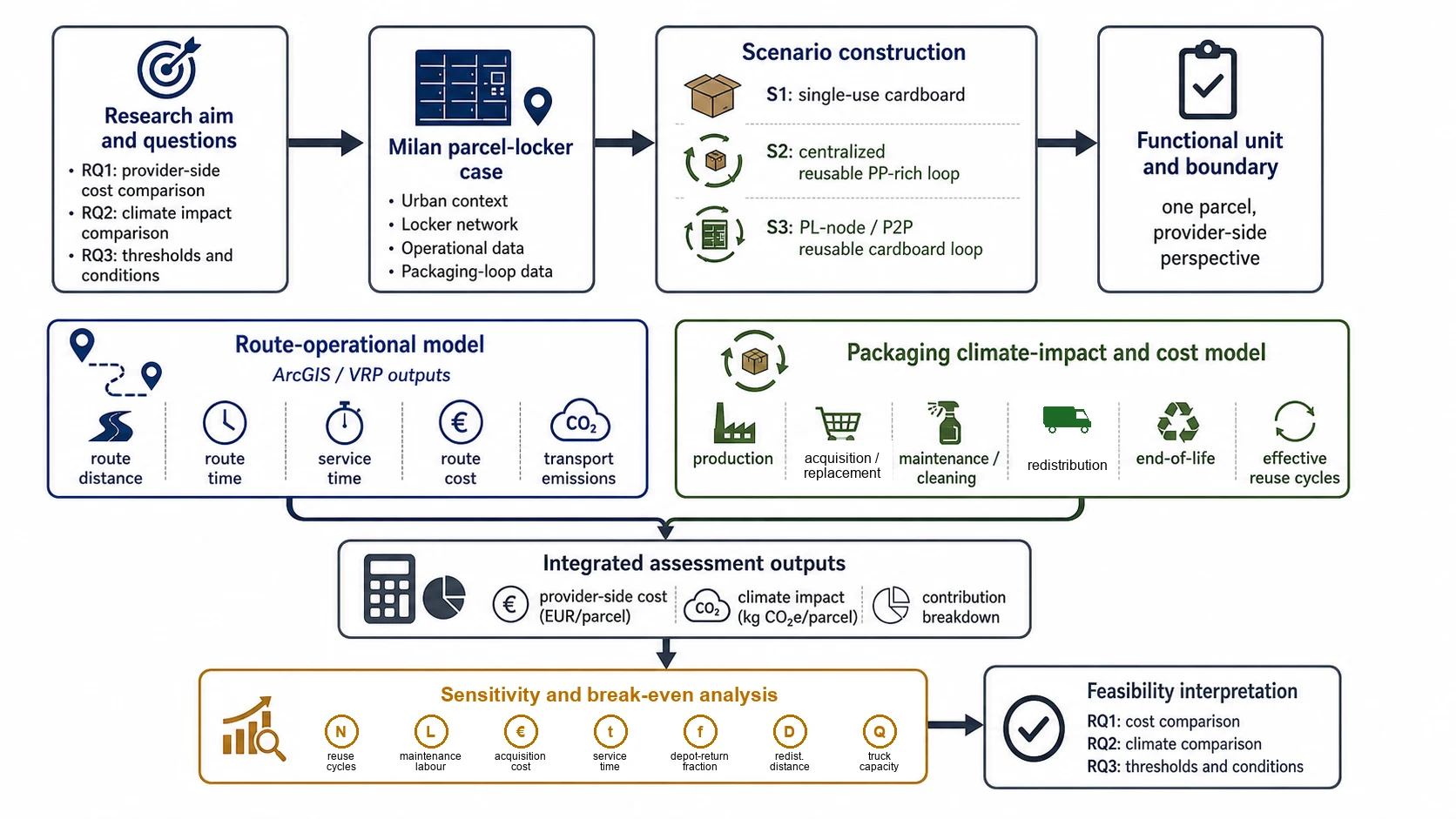
- Defined three comparable scenarios: single-use packaging, centralized reusable circulation and a decentralized local-circulation model around parcel lockers.
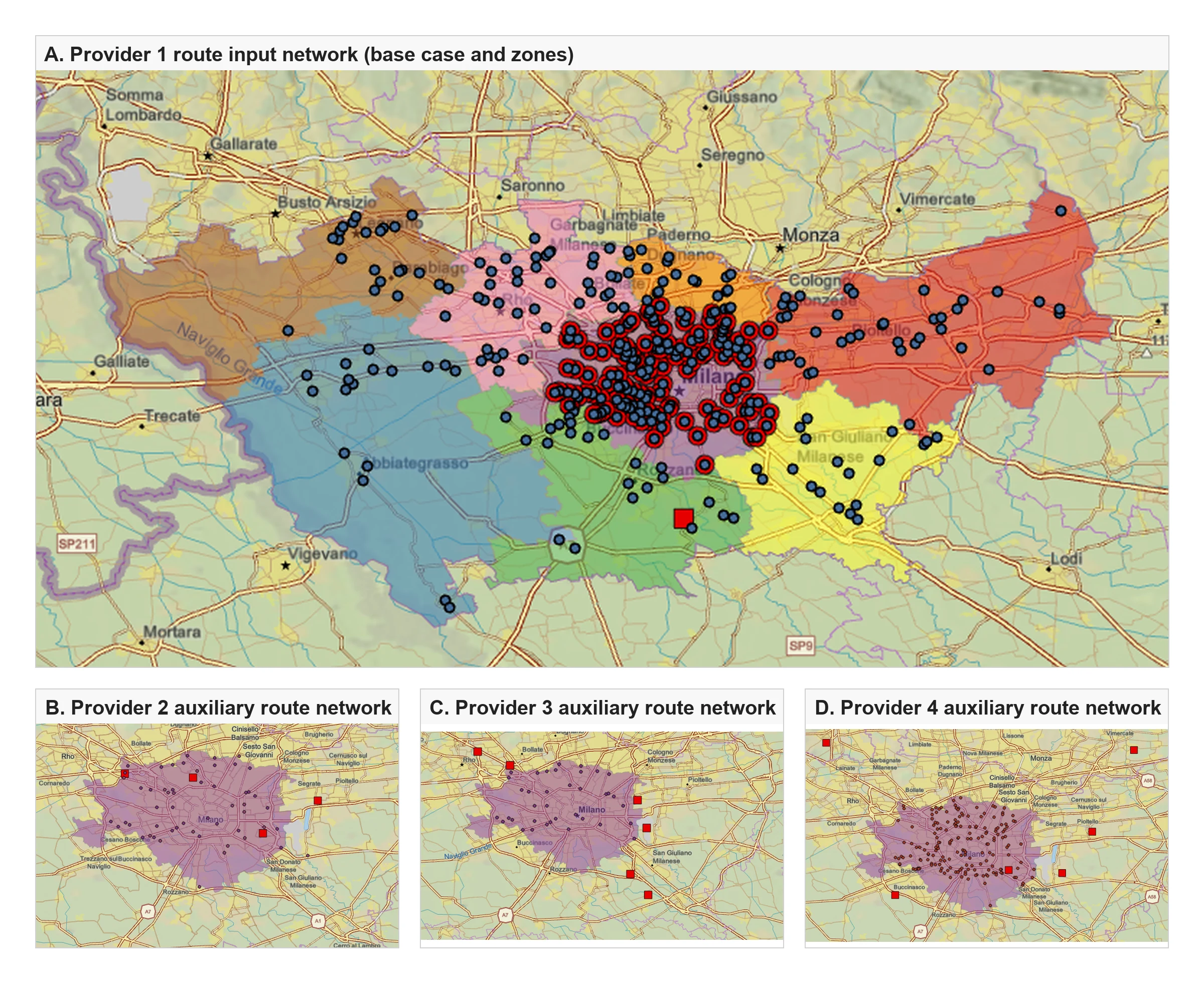
- Integrated ArcGIS network routing, packaging life-cycle assessment and provider-side activity-based costing into a common per-parcel model.
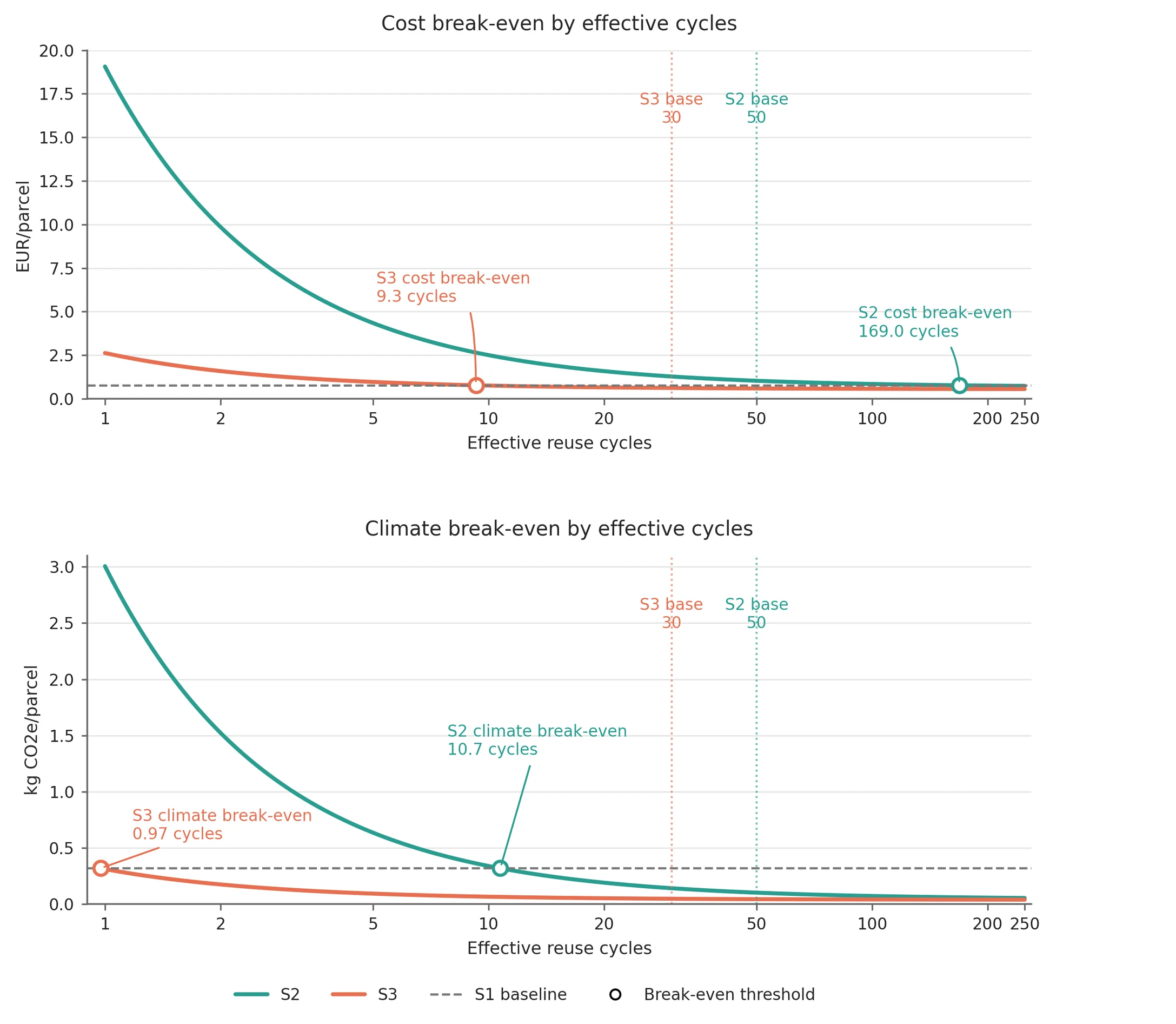
- Tested utilization, return rate, loss, transport and packaging assumptions through break-even and sensitivity analysis to identify the conditions that change the decision.
−20.5%provider cost vs. single-use
−85.5%CO₂e vs. single-use
9.27cost break-even uses
3last-mile scenarios modeled
Outcome
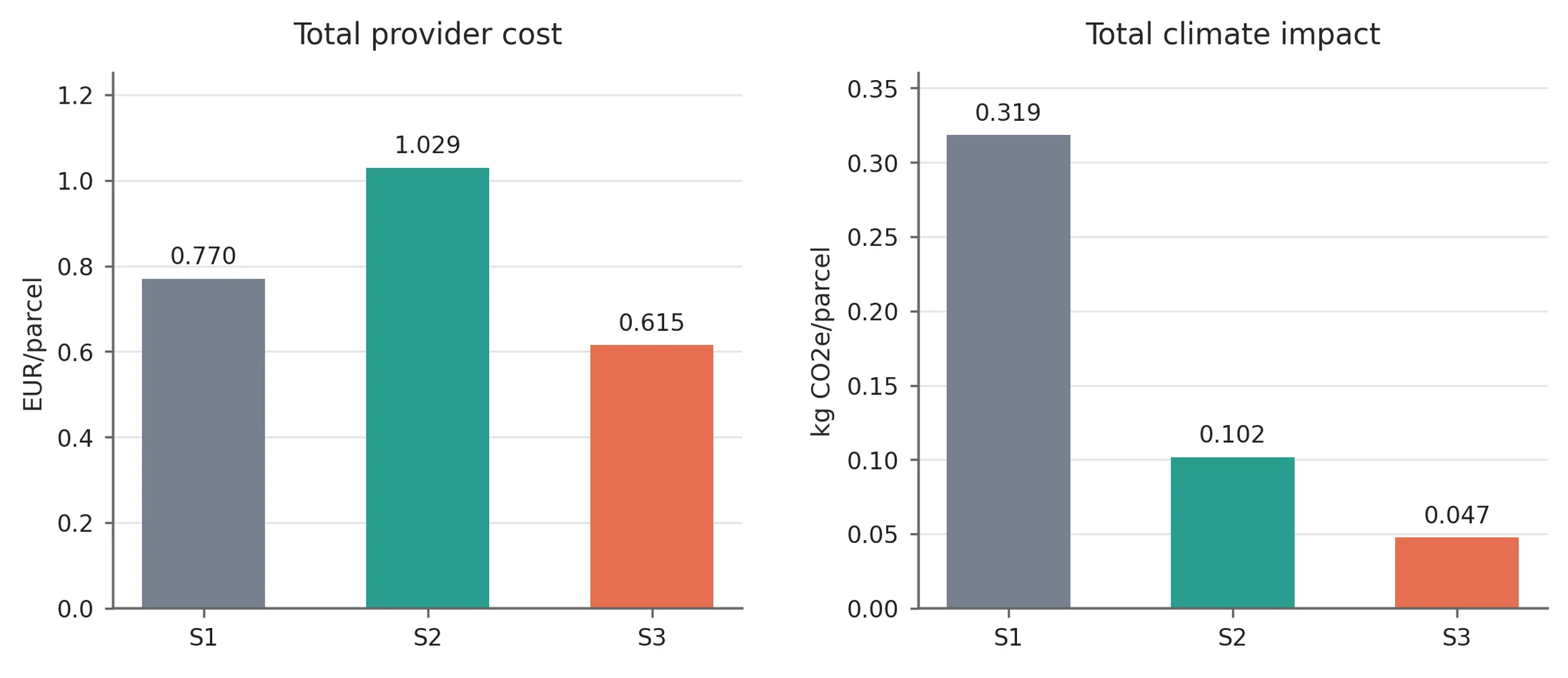
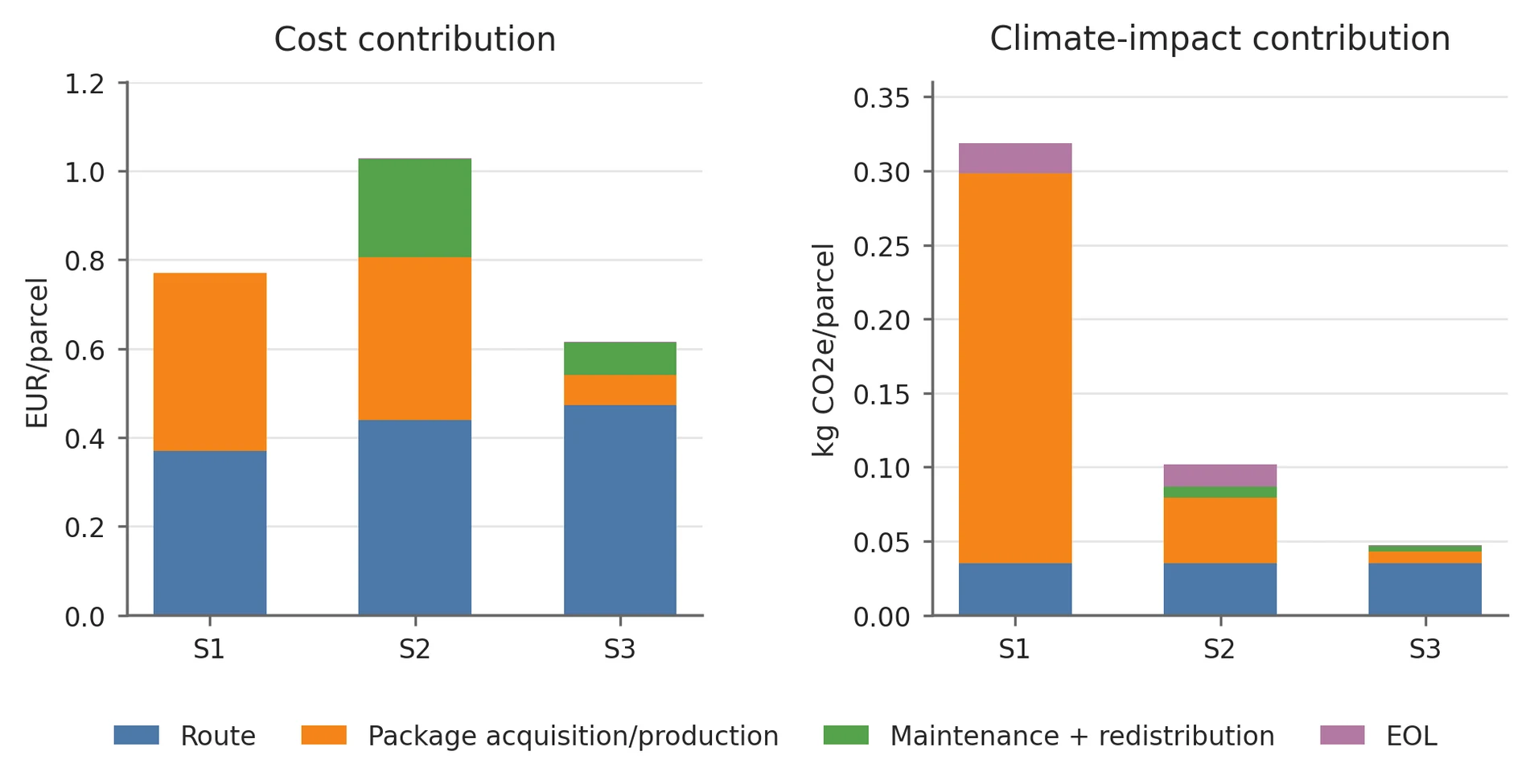
Local circulation was the only reusable scenario to outperform single-use packaging on both dimensions in the base case, reaching €0.615 and 0.047 kg CO₂e per parcel. Centralized reuse reduced emissions but remained more expensive, showing that reverse-logistics architecture—not material substitution alone—determines feasibility.