02
Inclusive Design · Public Services
2026Inclusive Interface for E-Health & Basic Services
A Universal Design proposal that restores autonomous access to Italian digital health services for older adults and other underserved groups.
Role
Research and solution design
Context
Four-person research team · Politecnico di Milano
Methods
Universal Design · Policy Analysis · E-Health · Accessibility · Voice UI · USSD
The challenge
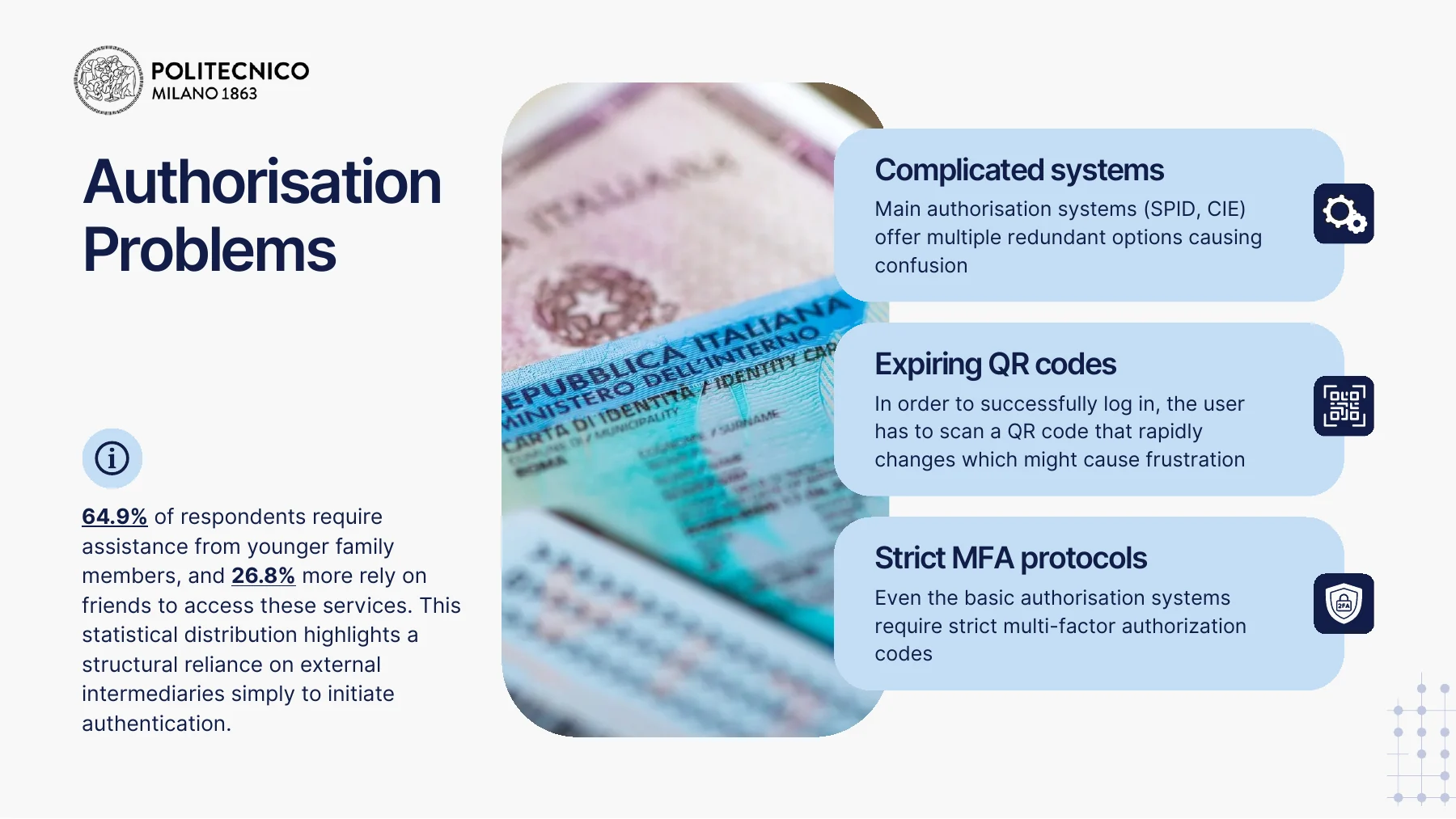
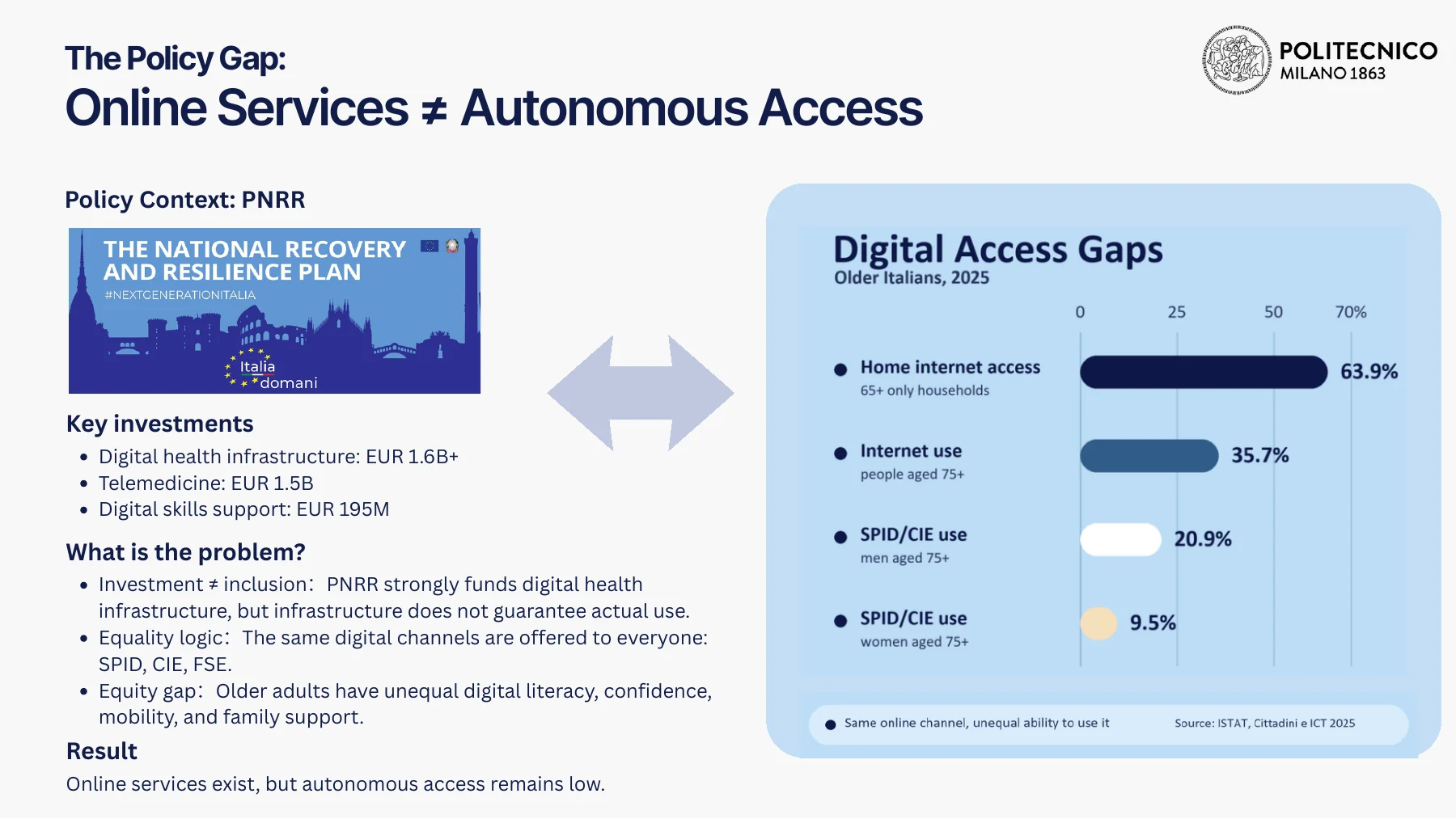
Italy's digital health stack assumes that online availability equals independent usability. Complex authentication, cognitive load, unequal connectivity and weak accessibility instead push many older adults toward dependence on digital caregivers.
The approach
- Combined adoption data, stakeholder analysis and policy review to expose the gap between infrastructure investment and autonomous access.
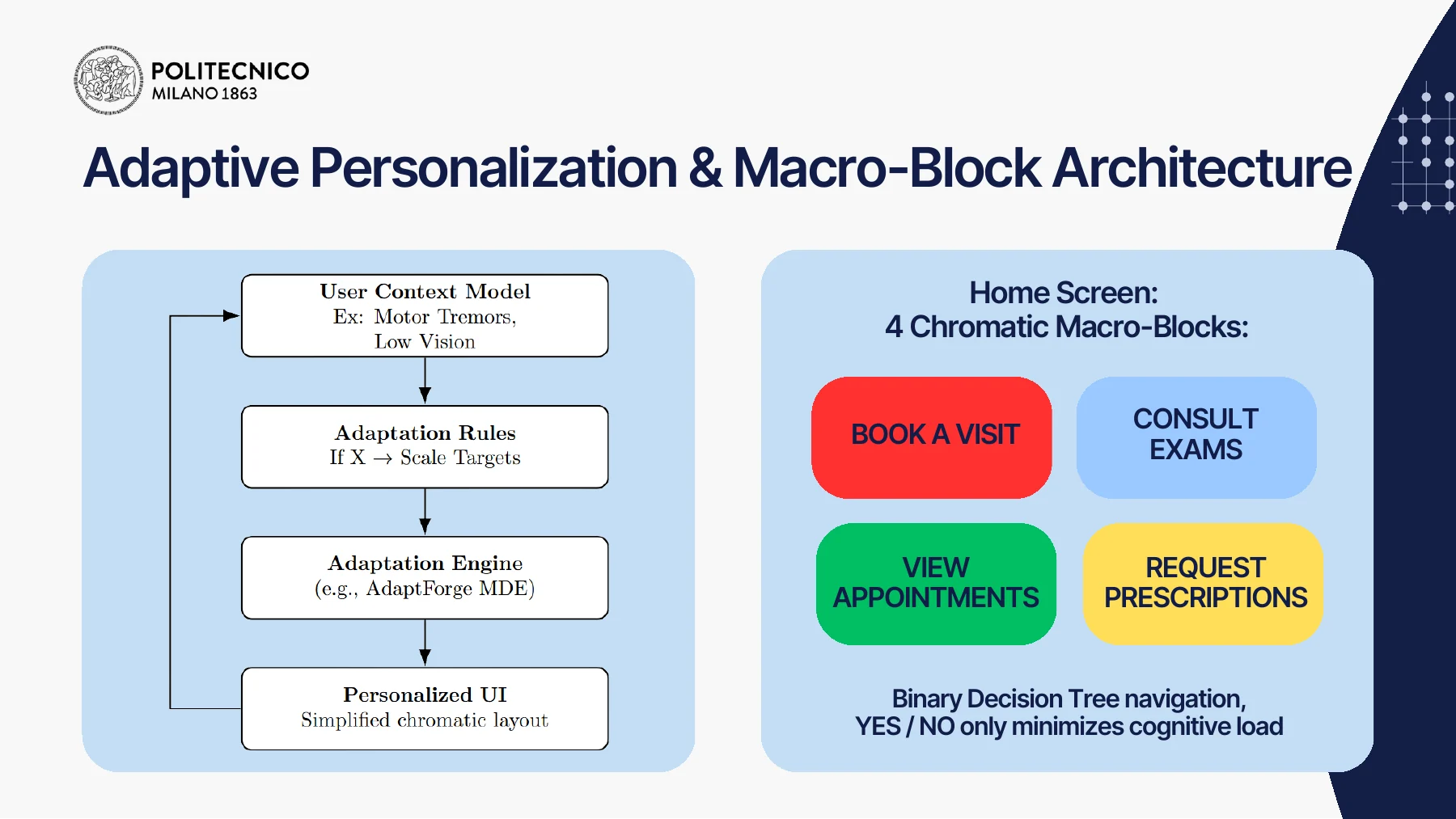
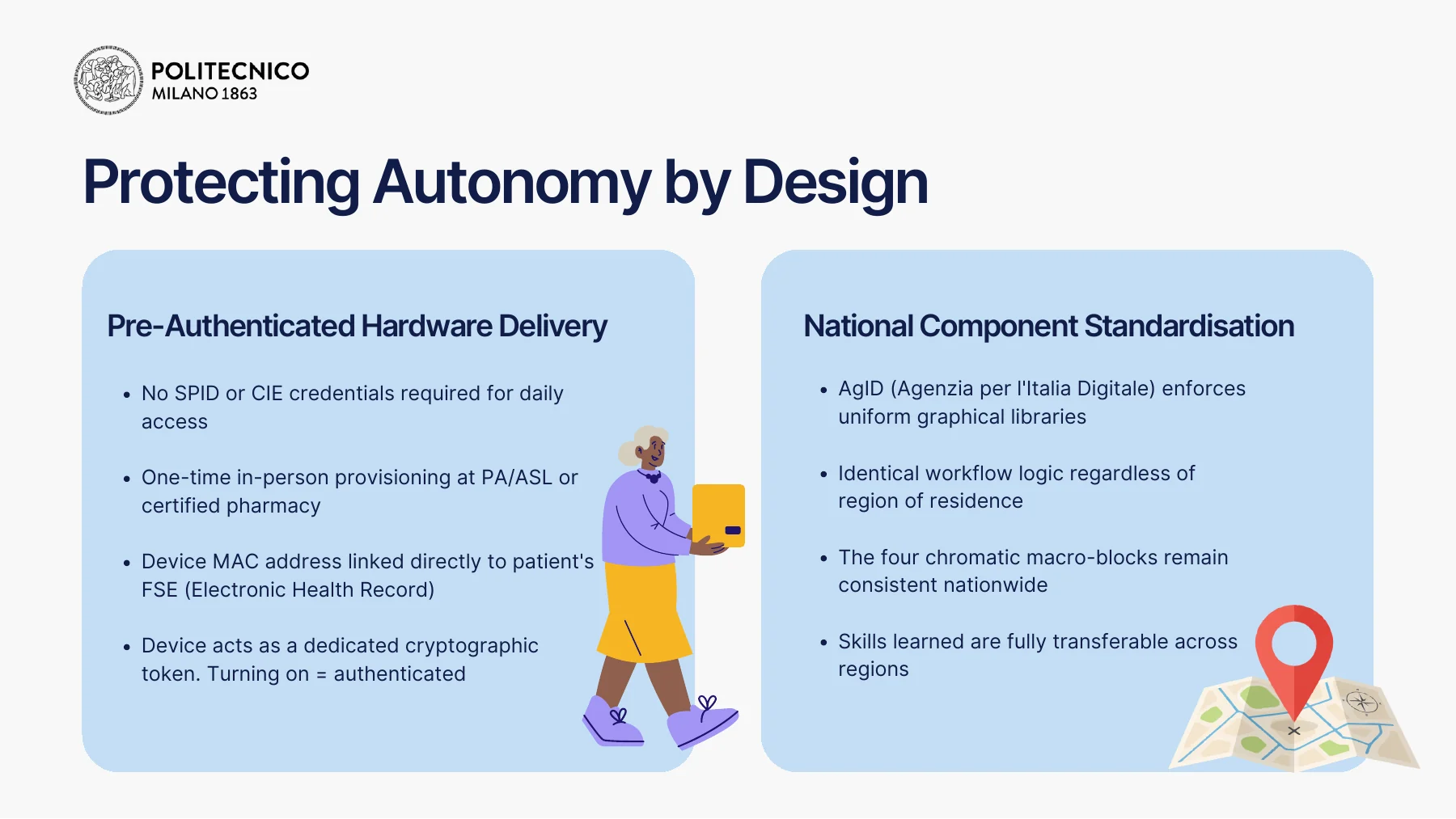
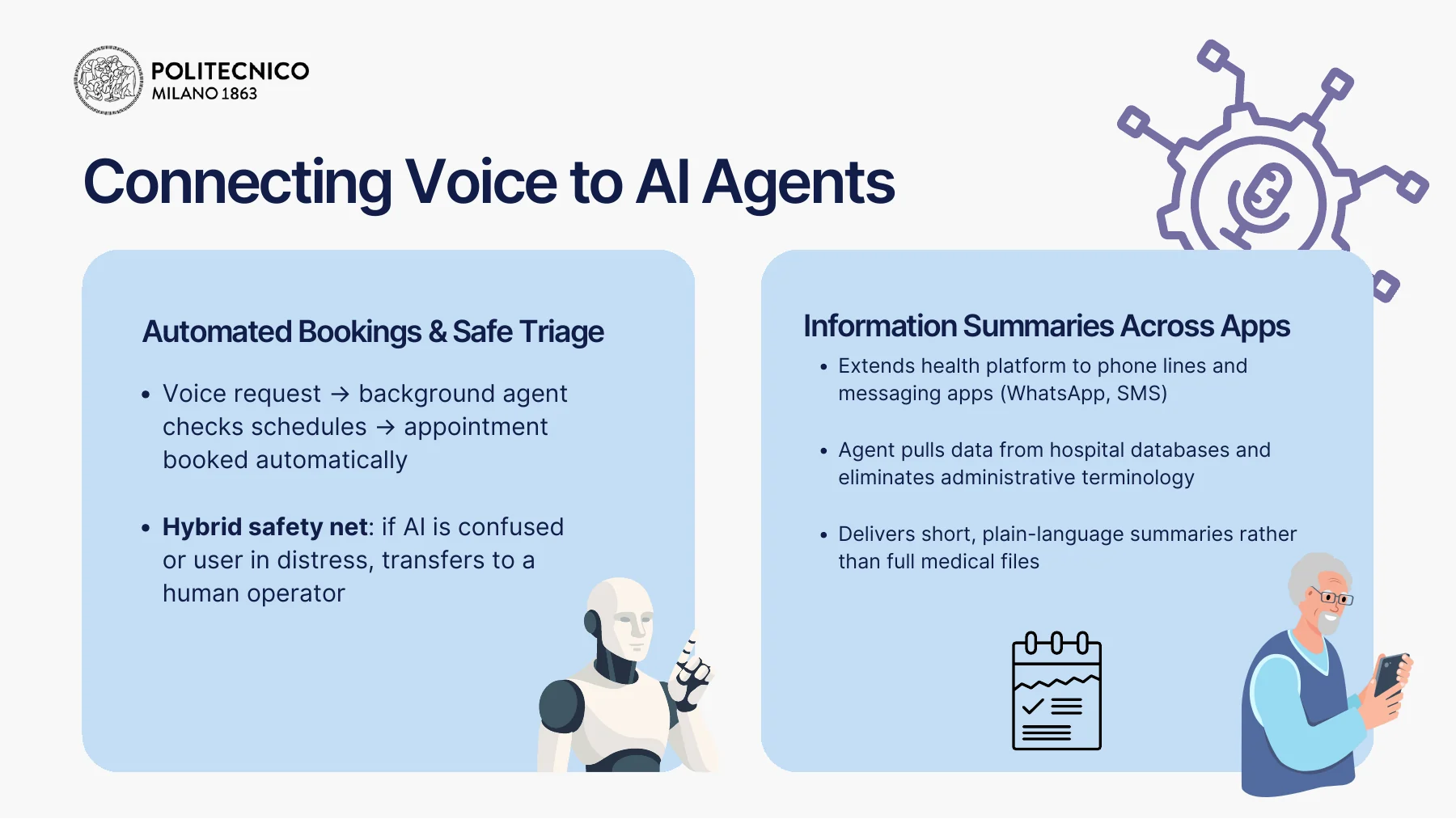
- Designed a dedicated, pre-authenticated device around four chromatic macro-blocks, binary navigation, voice input and plain-language audio output.
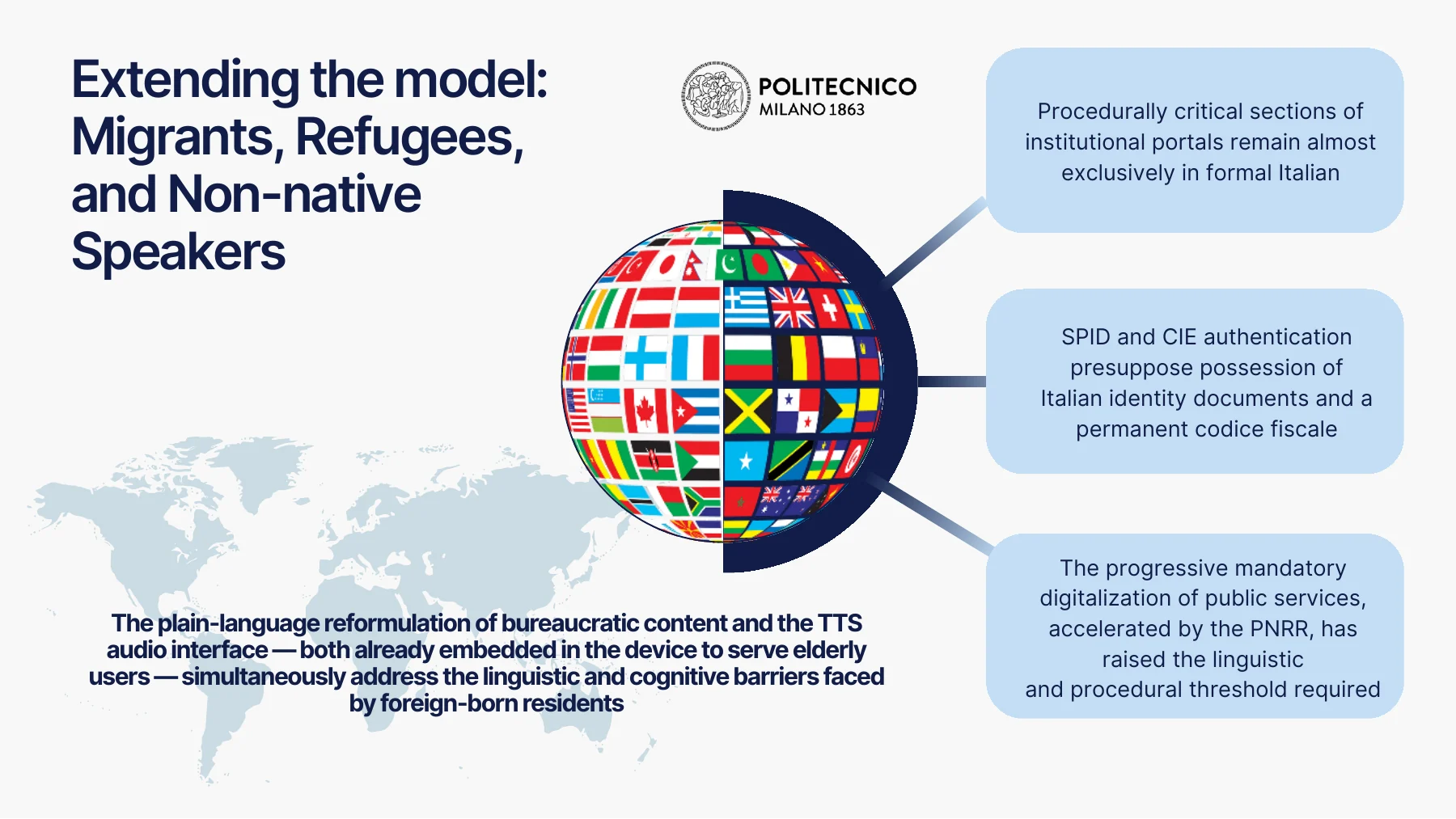
- Stress-tested the concept across rural connectivity, visual impairment and non-native language scenarios, introducing a USSD fallback and transferable national component logic.
64.9%older users relying on family help
4high-clarity service blocks
2Glow-bandwidth USSD fallback
3underserved groups addressed
Outcome
The proposal shifts inclusion from training users to fit complex systems toward redesigning the access point itself. One simplified device supports elderly users first while extending the same investment to visually impaired and foreign-born residents.